

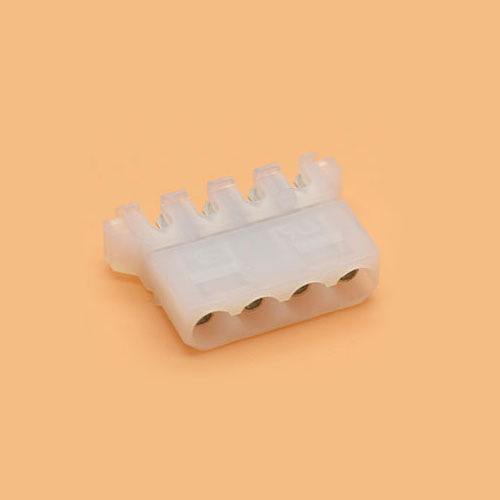
As someone who has been deeply involved in the connector industry for many years, I’ve witnessed the remarkable evolution of connector technology—from traditional designs to modern innovations. Today, I want to discuss this industry’s development, particularly the transition from classic 5.08mm pitch terminals to the now-popular MX ultra-thin series.
The Golden Age of Traditional Connectors: The Reign of 5.08mm Terminals
Remember ten years ago? Back then, 5.08mm pitch connectors dominated nearly half of all industrial applications. Why did 5.08mm become the industry standard? Because it perfectly balanced electrical performance, mechanical strength, and installation convenience.
What advantages did 5.08mm terminal blocks offer? First, their spacing was sufficient to prevent arcing and short circuits. Second, their size made manual wiring easy, even for less experienced technicians. And third, their current-carrying capacity was excellent, meeting the needs of most industrial equipment.
But as electronic devices trended toward miniaturization and higher density, 5.08mm connectors began to show limitations. Have you noticed how modern devices are becoming increasingly compact? This raises an important question: How can traditional connectors adapt to the demands of the new era?
The Inevitable Trend Toward Miniaturization
The market’s demand for smaller devices has driven innovation in connector technology. Think about it—how big was an industrial control computer ten years ago? Today, a device with the same functionality might be just a quarter of the size! This shift directly created demand for connectors with smaller pitches.
From 5.08mm to 3.96mm, then to 2.54mm, connector spacing kept shrinking. But what was the real breakthrough? The emergence of the MX ultra-thin connector series! This innovation not only reduced size but also maintained excellent electrical performance.
Why has the MX series become an industry favorite? Because it solves the conflict between miniaturization and reliability. Conventional wisdom suggested that smaller connectors were less reliable, but the MX series shattered this myth with innovative design.
The Technological Breakthrough of MX Ultra-Thin Connectors
The MX 3.0 connector represents the cutting edge of current industry technology. What makes it so impressive? First, its ultra-thin design saves valuable device space. Second, its high-density layout provides more connection points in a limited area. And third, its innovative contact structure ensures stable electrical connections.
How does the MX series guarantee reliability? It’s all thanks to precision manufacturing processes and high-quality materials. The plating technology on contact points, the temperature resistance of insulating materials, and the mechanical strength of the housing—every detail is carefully engineered.
Did you know? Despite their small size, MX connectors don’t compromise on current-carrying capacity compared to traditional products. How is this possible? The key lies in optimizing current paths and heat dissipation, proving that miniaturization doesn’t have to mean sacrificing performance.
Expanding Applications and Changing Needs
The shift from 5.08mm to MX 3.0 isn’t just about size—it’s about expanding possibilities. Traditional industrial connectors were mainly used in control cabinets and large equipment, but where do we see MX series connectors today? Robotics, medical devices, new energy systems… you’ll find them in almost every high-tech field imaginable.
Why do these emerging industries prefer MX connectors? Because they need high-density, high-reliability interconnect solutions. Imagine the connectors inside a surgical robot—they must be compact enough not to interfere with the overall design, yet flawless in connection quality.
Frequently Asked Questions
Q: What factors should be considered when transitioning from 5.08mm to MX connectors?
A: You’ll need to consider PCB layout, current requirements, and environmental conditions. While the MX series is more compact, make sure it meets your specific application needs.
Q: How does the MX connector perform in vibration resistance?
A: Modern MX connectors feature anti-vibration designs, with special locking mechanisms and contact point engineering that make them perform exceptionally well—even better than some traditional connectors—in vibrating environments.
Q: Are high-density MX connectors harder to install?
A: Quite the opposite! The MX series typically uses tool-free installation, making it more convenient than traditional screw terminals. Of course, high-density layouts require more precise PCB design.
Q: Can MX 3.0 connectors replace traditional 5.08mm products?
A: It depends on the application. In space-constrained, high-density scenarios, MX is ideal. But for high-current applications or frequent plugging/unplugging, traditional connectors may still have an edge.
Future Outlook: Where Is Connector Technology Headed?
Standing at the forefront of the industry, I can clearly feel the rapid advancement of connector technology. The shift from 5.08mm to MX 3.0 is just the beginning—what’s next? Smaller pitches? Higher density? Or perhaps smart interconnect solutions?
One thing is certain: Connectors will continue evolving toward higher performance, reliability, and integration. As professionals, we must keep up with technological trends while remembering the essence of connectors—providing safe and reliable electrical connections.
Conclusion
Looking back at the evolution from 5.08mm terminals to the MX ultra-thin series, I’m struck by the industry’s vitality and innovative spirit. Every technological breakthrough stems from a deep understanding of customer needs and an unwavering commitment to quality.
Whether you’re using traditional connectors or considering an upgrade to the MX series, the key is choosing the solution that best fits your application. After all, in the seemingly simple yet critical world of connectors, details determine success, and quality ensures safety.
What are your thoughts on connector technology trends? Let’s discuss this exciting and innovative field together!